Learning About Culture & Community:Unschooling in the Real WorldBy Eva Swidler
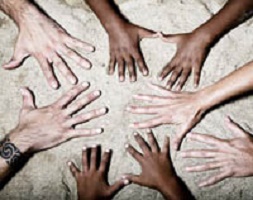
Photo © Shutterstock Images Is keeping our children out of school enough? If kids learn at home, should we still be thinking about the world they are surrounded with and what they will learn from it, or should we as life learners let things run a seemingly unguided course? Life learners excel at realizing just how much kids – and adults – learn from people they know, from situations they encounter and from their surroundings in general. This is the foundational insight of the philosophy, after all. We know, value and facilitate the fact that children and adults alike learn by example and immersion, from every interaction with reality. Life learners also emphasize the active part of the learning process: We know that for real, positive learning to take place, learners have to want to learn. Learners choose to learn, they discriminate among possibilities, they seek out their mentors and models and information and they interact with reality to arrive at their own insights and conclusions. The desire and initiative of the learner to understand and master, rather than outside coercion or manipulation, is the driving force of real education. All of these insights are minimized or even denied by mainstream ideas of schooling, succinctly described sometimes as the “banking theory of education.” (The teacher deposits information in a passive student’s brain, for later withdrawal.) The strong emphasis that we put on the importance of the role of the individual in building her/his own learning and path makes perfect sense, given the pressures from society at large and from the educational bureaucracy that urges us to be passive, not active, to put ourselves and our children into the hands of “experts” and to allow ourselves to be taught rather than to learn. But as a result, sometimes the first principle of life learning – that we learn constantly and imperceptibly from the world around us – fades into the background of our consciousness. When we critique the institution of school, we do think about how we learn lessons from the social world around us. We know that the world of school structure can lead us to learning patterns that are self-destructive, hurtful, paralyzing, counterproductive, divisive and even immoral – all that “hidden curriculum” that John Taylor Gatto, for instance, points out in his book Dumbing Us Down. Keeping our children out of school protects them from these crippling lessons that we don’t want them to learn. But is keeping our children out of school enough? If kids learn at home, should we still be thinking about the world they are surrounded with and what they will learn from it, or should we as life learners let things run a seemingly unguided course? Perhaps because of life learners’ focus on the role of the individual in self-determination, I think that many of us wrestle awfully hard with what our roles and possibilities as parents are in building social and personal values in our children. How do we combine letting our children make their own paths with instilling values of community, anti-racism, anti-sexism or any other value we hold important? Does being a “real” unschooler mean that there isn’t a place for us to pass these values on? That our kids have to construct their own morality and vision from the ground up? That they should have unlimited access to things we find morally objectionable or personally disabling and just make their own decisions? Most of us know that we want our children to have a moral compass that we feel expresses justice and compassion. We want our children to believe that every door to a positive future is one that they could open and follow, if they wanted to. But how do these outcomes happen? Exactly our experience as life learners, emphasizing and demonstrating how much we all learn all the time from our surroundings, also teaches us that we all get lessons in gender, race, class, violence and many other values from our daily life experiences. What if these are lessons we are not happy about? Is there a place for us to intervene? A responsibility for us to intervene? How can we, without violating our principles as life learners? I think the answer lies somewhere in the ideas of culture and community. What we call life learning isn’t so dissimilar from a lot of what anthropologists call acculturation or what sociologists call socialization. No one is just an individual, nor are we just families; we are all part of a culture and society. What we all learn from life isn’t just the result of natural interest and inclination; it’s the result of culture too. After all, the most uncoerced, life-learning North American child has developed very differently than, say, a totally life-learning Mayan child in the year 950 in what is now Guatemala. Of course their life learning is different from each other’s; their lives are different. Kids who learn naturally in each of these cultures are not just following a natural course. Each culture presents different possibilities and different messages about adulthood, success, men, women, etc. It is out of this cultural raw material that we all shape our own lives. For instance, for us now, the culture at large tells us that girls like pink and don’t like math. And although our girl didn’t think so when she was a newborn, she’ll certainly get these messages pretty quickly. However she copes with them, she will have to cope with them. There is no such thing as a cultureless person. Interactions with every object and every human carry cultural messages, whether we notice them or not and whether we like them or not. How can we work with this observation? Well, we’ve already taken the biggest first step, the one that in our society might require the most courage: We’ve kept our kids out of school and away from its culture, its social order, its milieu from which children absorb pernicious lessons. We’ve taken the responsible step of protecting our children from the destructiveness of standardized tests and grades, classroom tracking and humiliation, bells and coercion. How do we follow through on that continuing responsibility for our children’s surroundings after we make the decision that they won’t go to school? What next? The specific answers will be different for everyone, but all will share the next step. Before anything else, we have to ask the questions: What world is our child learning from, what lessons might they be drawing from that world and how do we feel about those lessons? We’ve removed one social and psychological world, that of enforced schooling, so what world have we put ourselves into instead? And are we content with it and the lessons that it will be teaching? One important place where life learners start asking these questions and going about creating answers we like is ourselves and our family. Not only do we parents frequently engage in a deschooling process to rid ourselves of baggage from our own schooled days, we take steps to become more engaged life learners ourselves, teaching our children by example and healing ourselves in the process. Beyond the internal personal steps I’ve needed to work on about judgment and self-judgment, I also try to think about the social lessons that I reflect. What kind of expectations about gender roles will my daughter learn from watching my husband and me interact, divide household tasks or decide which parent plays sports with her and which parent cooks with her? Do I really walk the walk or just talk the talk about body image and beauty? How do I treat homeless people who approach me on the street? Why is my social circle so white in such a multiracial and multicultural city? Do I hope for my daughter to be able to do better than I have and, if so, shouldn’t I be able to do better too, both for myself and to show her how and why? These questions and projects will surely be a lifelong task...and that’s a good thing, not a bad thing. Life learners have also assembled assorted tools in their bags to help their children (and themselves!) think about the unspoken messages in our larger culture outside the household. Sometimes, I am unashamed to say, that technique is as simple as elimination. I see no reason why I should allow the corporate media to feed my daughter images and messages destructive to her sense of self-worth at the age of seven, any more than I should have allowed the school system to have her for six hours a day. Both of these cultures (school and corporate media) are out there in the “real” world, but that doesn’t mean that as a parent I don’t have the right and responsibility to control their access to my young child, or that it will be good for her or toughen her up if she has to confront their real but destructive messages in her formative years. Going to school isn’t natural learning, but neither is mass media. Both of these experiences are products of a culture, in this case North American culture of the last decades or century at most. As humans in general as well as parents, it’s always up to us to be active constructors of just what parts of our culture we want to participate in ourselves and with our children. Staying home from school is just the beginning. Of course, as members of a larger culture, our children will also want and need the ability to use many techniques from media literacy and critical thinking to look at the social world around them. Regardless of whatever age your child begins watching movies or poking around on the Internet, we’re all exposed from birth on to a sea of persuasive messages as well as built in cultural assumptions. I still cringe and try to distract my daughter as we drive by the giant highway billboard of a pornographically clad woman advertising a men’s sex club. I still scramble for answers when my daughter asks me about the bus stop posters for TV shows featuring what are, in fact, children in heavy makeup and high heels. Luckily, there is a large body of writing and videos specifically for and about children and the media. Although Shari Graydon, in Made You Look, claims that my daughter is still in an age group where it is difficult for her to perceive the agenda of advertising, we’ve already been able to use many of the techniques recommended in that wonderful book (written for children approaching and in their teens) to discuss billboards, kids’ movies, and toys. But our focus on the fact that learning takes place constantly and effectively through our life experience means that we can use another set of tools, positive tools, that doesn’t get talked about as much: the tools of community building. Sometimes our need to defend life learning leads to an emphasis on each of us as individuals with individual needs and abilities, and a minimization of each individual as a part of and contributor to our culture. We can use our understanding of the power of social surroundings as the source for what we learn by focusing on finding, participating in, or building communities that embody our values. Those communities don’t have to be with other homeschoolers. In fact, I think it is even more important for my daughter to be in community with adults outside the unschooled world who share approaches and values with us and who feel the way we do about war, social injustice, or making music. My daughter and husband, for example, volunteer at a street puppet making center that helps people to create street theater on social and political issues. We all recently joined a Philadelphia New Year’s Mummers’ parade performer brigade based in a local artists’ collective; our theme for this past year’s New Year’s parade was being under water in rising coastlines in the perpetual global warming summer. We also take the bus with the local organizers from U.S. Labor Against the War to Washington D.C. for peace rallies. Sometimes society’s ideas about age segregation and appropriate childhood participation are a challenge that we must work on, but all of these situations have presented to our daughter the possibilities of being an adult like those people are, and having a community like these are, not just for the years that she will be homeschooling but all her life. To her, these are viable lives to live and cultures to be part of. This is true within the homeschooling community too. There are those who happily go their own way, choosing not to participate in local playground days or support groups and finding their community in the larger world. But many or most of us have at least some consistent contact with others in a homeschooling community. It offers support for the parents, companionship for the children, and a lot of practical help for all its members. So a final question is: How does that homeschooling community function? Are we spending enough – or even any – time thinking about its power dynamics, racial and class makeup, or gender relations? What kind of community are we immersing our children in? What kind of culture are we building as an alternative to the culture of school and, thereby, offering to our children as examples? And what can we do to make it better? Frank Smith, in a wonderful book called The Book of Learning and Forgetting, makes a case that the emotional connection a learner feels to a community is actually the key to any successful learning. With such a connection, learning may take effort, may take time. But it unfolds automatically and unconsciously, as well as consciously. Without such a connection and sense of identification with the community that is providing and demonstrating information or a way of thinking, no real learning will ever take place. The sense of membership and inclusion must underlie any learning that is adopted into the heart and soul of the learner. Any other learning will fail to be incorporated into the thinking of the learner and will be of the regurgitate-it-and-forget-it variety. This observation explains, for instance, how boys and girls may grow up in the same family, but by identification with different family members learn to talk, walk, and think differently. It explains how members of different races may go to the same schools, watch the same media, spend most of their waking hours exposed to the same accents and teachers as each other, but maintain very distinct subcultures; they each identify with different people in their cultural surroundings and educate themselves in the ways of those they identify with. Naturally, the identification process results partly from some kind of choice by the learners and partly from processes of society that tell them that they belong to some groups and not to others whether they like it or not (gender, race, etc.). Ironically, recognition of the power of this immersion learning has built support in many communities for the idea of public education – however unhappy many of those communities are with the realities of schools. Poor and oppressed communities want something better for their children than the hardships they have had to struggle with in their own lives. The promise of public education for these people is to offer children an avenue to social mobility through access to a different set of skills than the ones they would learn from life at home. The promise is a set of skills (not necessarily really useful, mind you, or actually any better than the skills at home, just valued by the powers-that-be in society) that might gain their children entrance to a different social world. They might include the “right” accent or “sophisticated” musical tastes. But we all, unfortunately, know what the perverse realities of public education are in exactly these communities. Saying that we are all cultural products doesn’t belittle or minimize our individual power to create our lives. Instead, working with that realization gives us a key of self-reflection to do more, to work together to create cultures and social worlds that open far more doors for our children as individuals and as parts of communities. We can make sure that our communities are ones that welcome girls into math and science or that encourage our boys to follow their desires into dance or fashion. We can widen the circles of possible friendships and relationships for ourselves and our children into true diversity. Building our own communities consciously can create a better world for us but also make – and teach – the world we want to pass on to our children. Eva Swidler lives in Philadelphia with her husband and young daughter, who has never been to school. She juggles spending time with her family, being part of an anarchist bookstore collective, seeking out community and teaching history. This article also appears in the book Life Learning: Lessons from the Educational Frontier. |
|
|